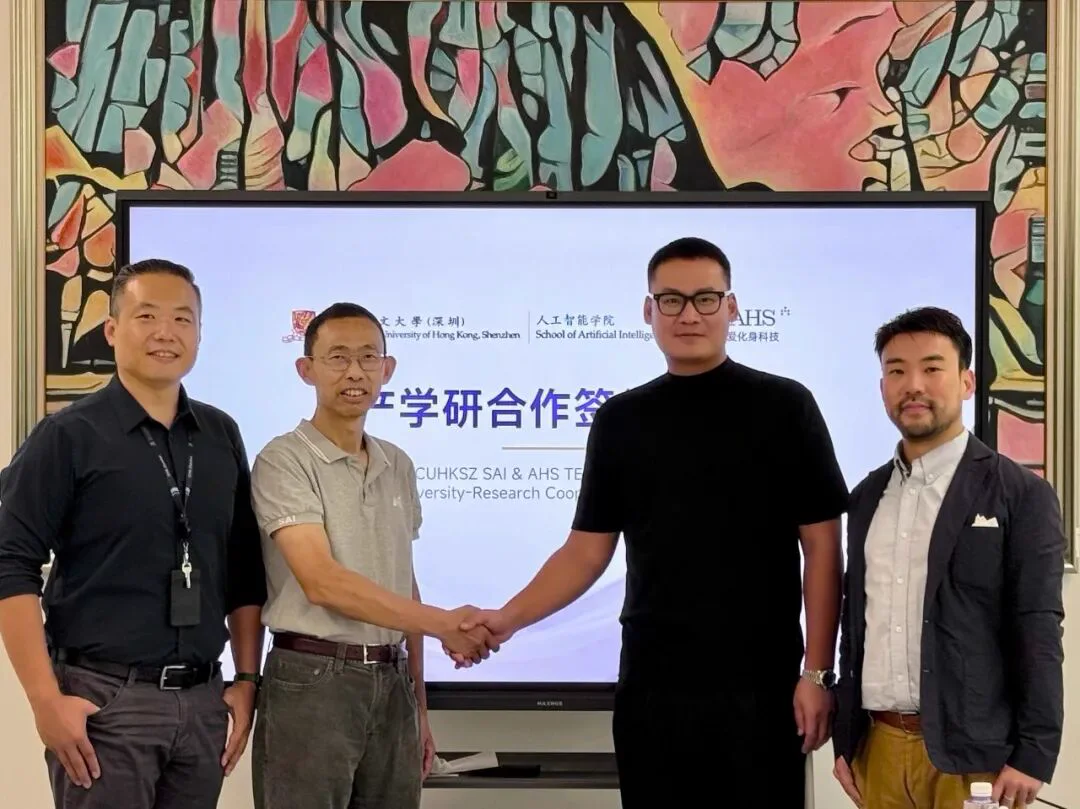
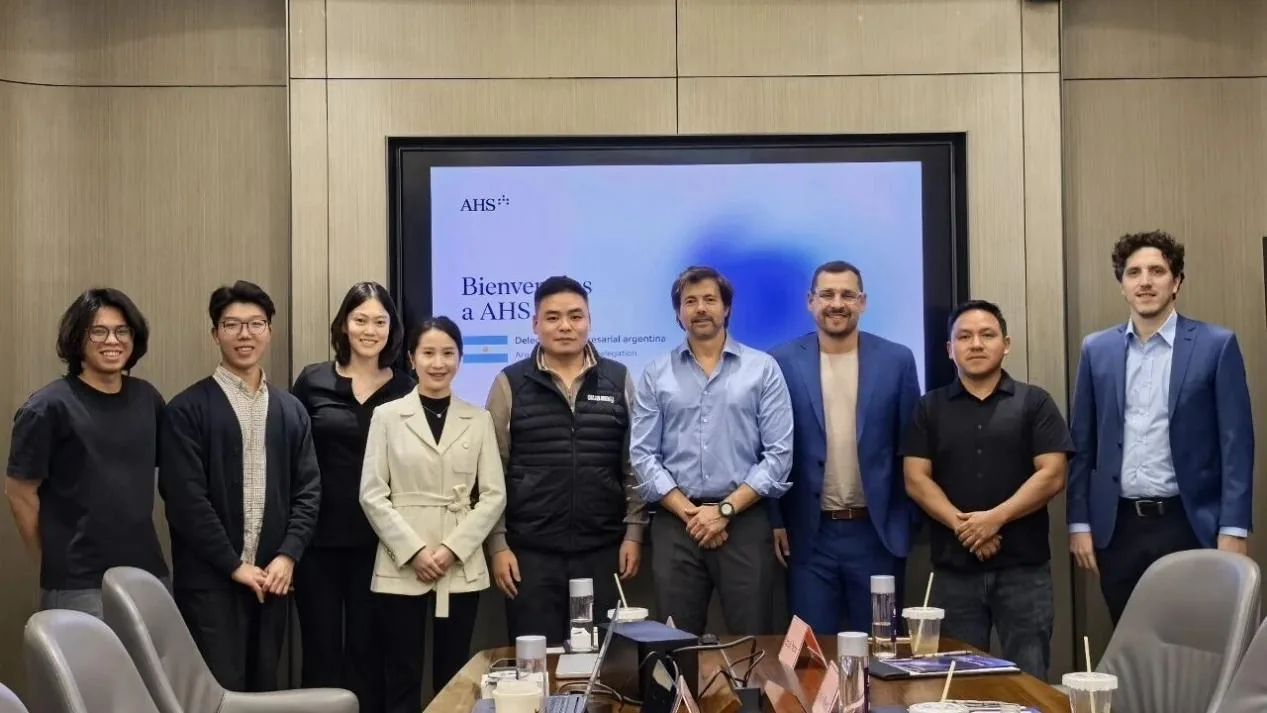
On November 25, Juan Pablo Routourou, CEO of Argentine IT consultancy Creatividad Hera S.A.S. (Hera), and CTO Ariel Biondi visited the Guangzhou office of AHS Technology alongside Joaquín Ribera, a representative of the Argentina–China Science and Technology Innovation Cluster (CITAC). They discussed enterprise AI solutions, industrial applications and market cooperation.
“We know the industry and have extensive hands-on experience, but we’re looking for a new way to work,” Routourou said. The discussion focused on how people and AI can work together to improve operational efficiency and streamline business processes.
Based in La Plata, Argentina, Hera provides business intelligence, IT services, systems integration and software development. It serves industrial and commercial clients, from data analysis through systems implementation. CITAC was launched on August 20, 2026, at the University of Buenos Aires, one of Latin America’s leading universities. It brings together universities, research institutes, technology companies and public bodies in Argentina and China to advance joint R&D, technology transfer and scientific and technological exchange.
AI has drawn growing attention in Argentina’s public services, industrial development and government digitalization, with adoption and governance advancing. Worldwide, companies are moving from using general-purpose tools to integrating AI directly into workflows. As digitalization advances, businesses are looking beyond collecting and displaying data. They want AI to understand their business knowledge and operating rules, spot opportunities, anticipate changes and support decisions.
That shift was evident in the talks. The delegation shared its experience in mining, energy, agriculture, healthcare and government. It focused on finding commercial opportunities, forecasting sales and supporting management decisions with AI, including using simulations to compare options for complex decisions.
In response, Lin Dong, director of capital markets at AHS, presented the company’s enterprise AI technology. “We want AI to do more than generate content or answer questions. We want it to work across business systems and help companies solve real operational problems,” he said.
AHS builds its technology around Agentrix, its enterprise AI operating system. The enterprise spatiotemporal ontology and World Behavior Model (WBM) help AI understand how information in different systems is connected and how the business operates. By analyzing business conditions and the outcomes of actions, the system can support operational decisions and scenario testing.
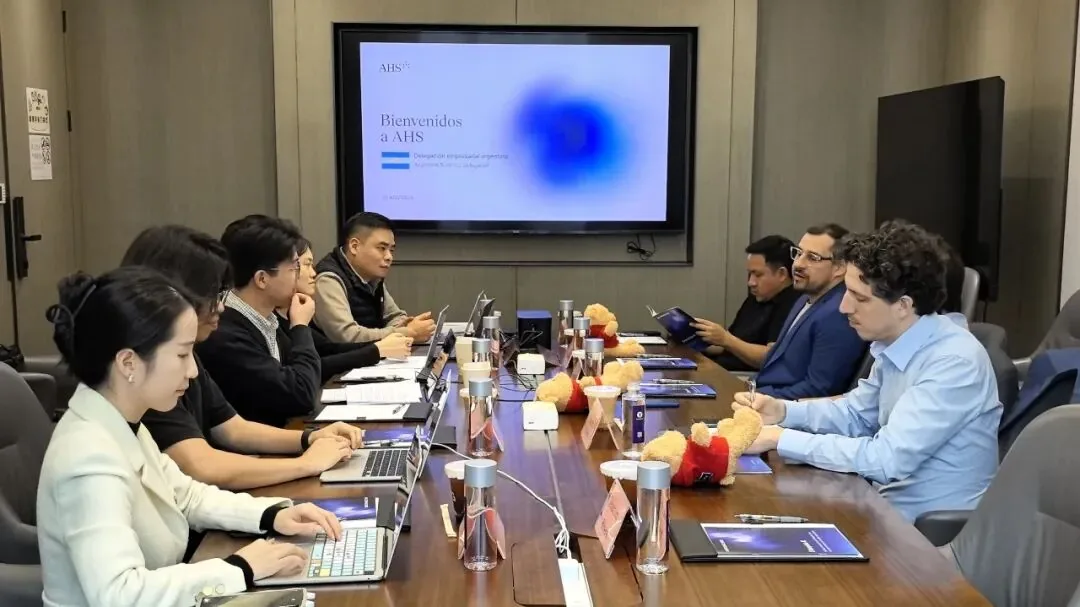
AHS demonstrated applications in energy engineering and urban operations. For energy projects, where project updates and market information are fragmented and leads take time to find, AHS showed how AI can detect potential projects across sources, verify leads and help sales teams assess opportunities. In the urban demonstration, simulations linked changes in traffic, pedestrian flows and infrastructure. The system analyzed conditions under different scenarios and compared response options to inform risk assessment and resource allocation.
As AI moves into core workflows, data security and organizational control were also central to the talks. The delegation asked about limits on enterprise data use, the reliability of sources, compliance requirements for system operations, agent permissions, anomaly detection and human intervention.
AHS described how it incorporates companies’ own business knowledge, operating rules, and security and compliance requirements into AI systems. Rules, access controls and human oversight define what data agents can use and what tasks they can perform. Recording sources and the basis for decisions improves transparency and traceability while supporting efficient, secure and compliant operations.
This is the basis of what AHS calls enterprise intelligence sovereignty. Beyond gaining AI capabilities, businesses need control over their data assets and business rules, clear authorization for actions, secure and controllable systems, and final human authority over critical decisions. AHS aims to integrate intelligence into day-to-day operations by grounding it in each company’s own data, knowledge and business logic, with security, compliance and control built in.
The talks opened opportunities for AHS to expand in Latin America and apply enterprise AI to local industries. With Agentrix at the center of its work, AHS will continue developing its technology and engineering capabilities to build secure, controllable AI infrastructure for large enterprises and complex organizations. Its goal is to bring advanced AI into business and public operations and create lasting value for industries and organizations.